What is known
Two pressures have converged in Sudan: fighting that restricts civilian movement and aid delivery, and a food crisis made worse by rainfall deficits and displacement.
The WHO’s 12 October IPC alert concerns the risk of famine in parts of Darfur and Kordofan. It should not be rewritten as a finding that famine was confirmed everywhere in those regions.
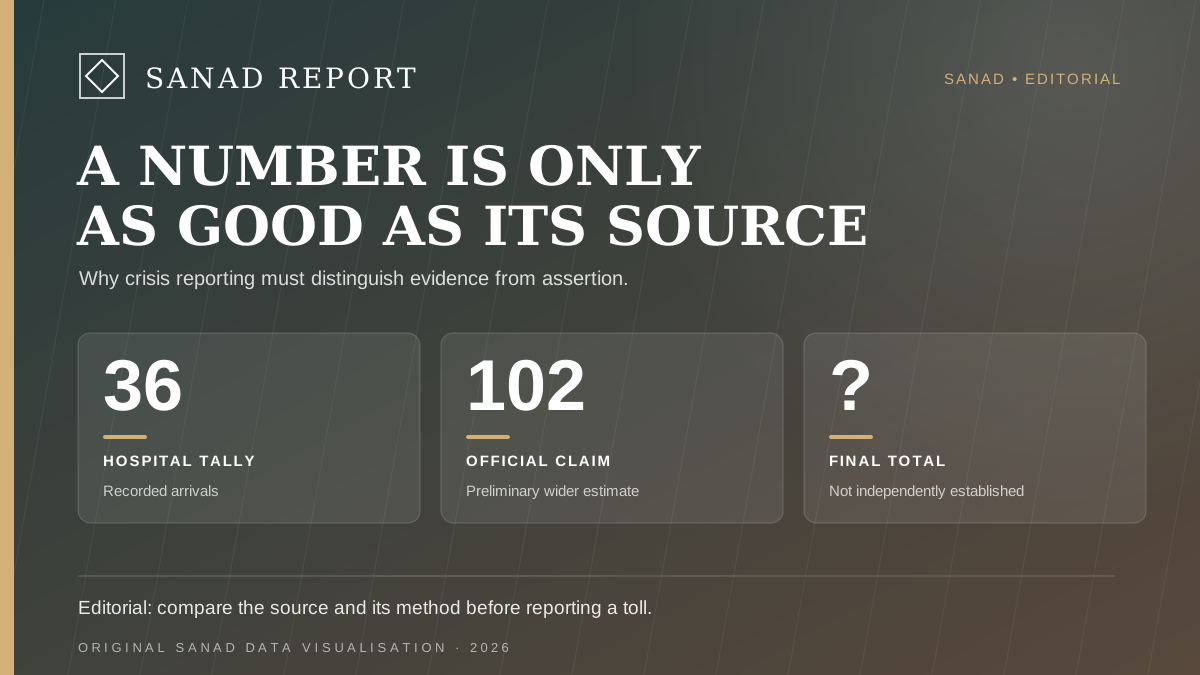
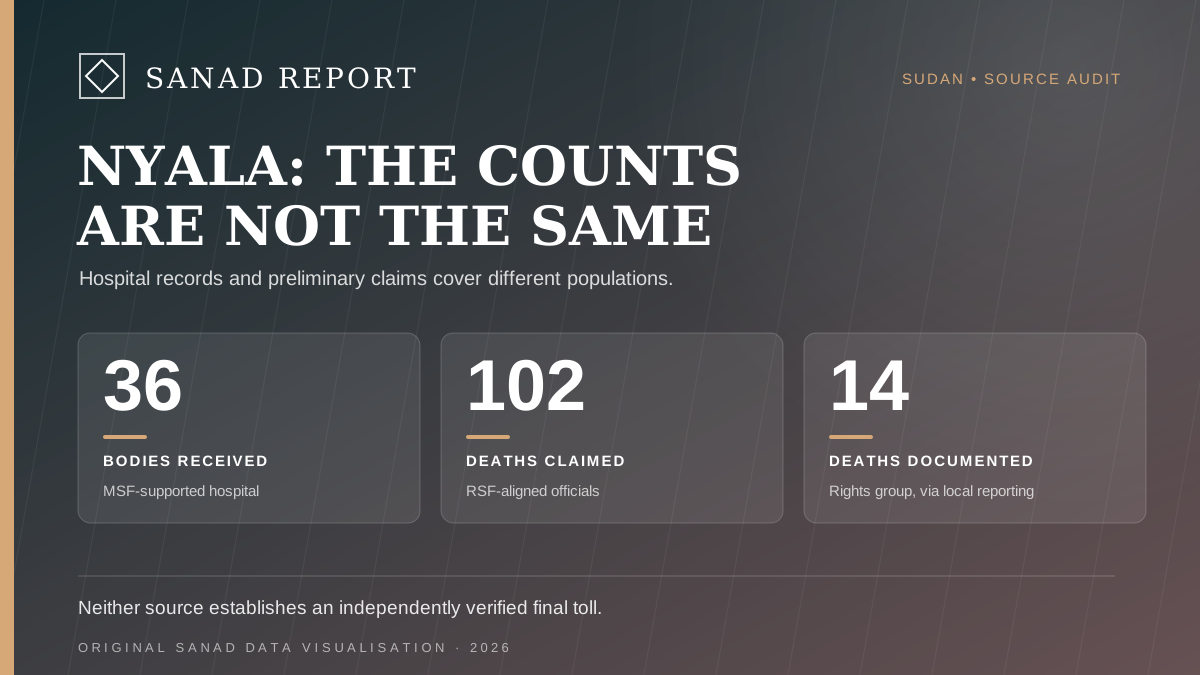
After the 26 October Nyala market attack, Médecins Sans Frontières counted 36 bodies received at a hospital and more than 150 wounded patients. A political authority aligned with a combatant claimed a larger toll. Their figures have different origins and are not yet independently reconciled.
What remains unanswered
The final death toll for the Nyala attack has not been established in the public documents reviewed by Sanad. Nor do the cited famine alerts determine the situation in every Sudanese district.
This hub collects published, dated reports, not a live minute-by-minute feed. Use the links below to see sources and methods. If stronger records emerge, we will update the individual reports with clear dates and correction notes.