Sanad editorial: Sudan's dead deserve better than an unqualified number
Our review of Nyala reporting found figures drawn from hospital admissions, an interested administration and separate rights documentation. Publishing them as one confirmed total would be wrong.
Sanad Desk editorial — the argument below is the publication’s view, not independent eyewitness reporting.
When a drone strikes a crowded market, a news organisation has two responsibilities that are easy to confuse: take civilian suffering seriously and say exactly what its evidence can establish. One does not excuse neglecting the other.
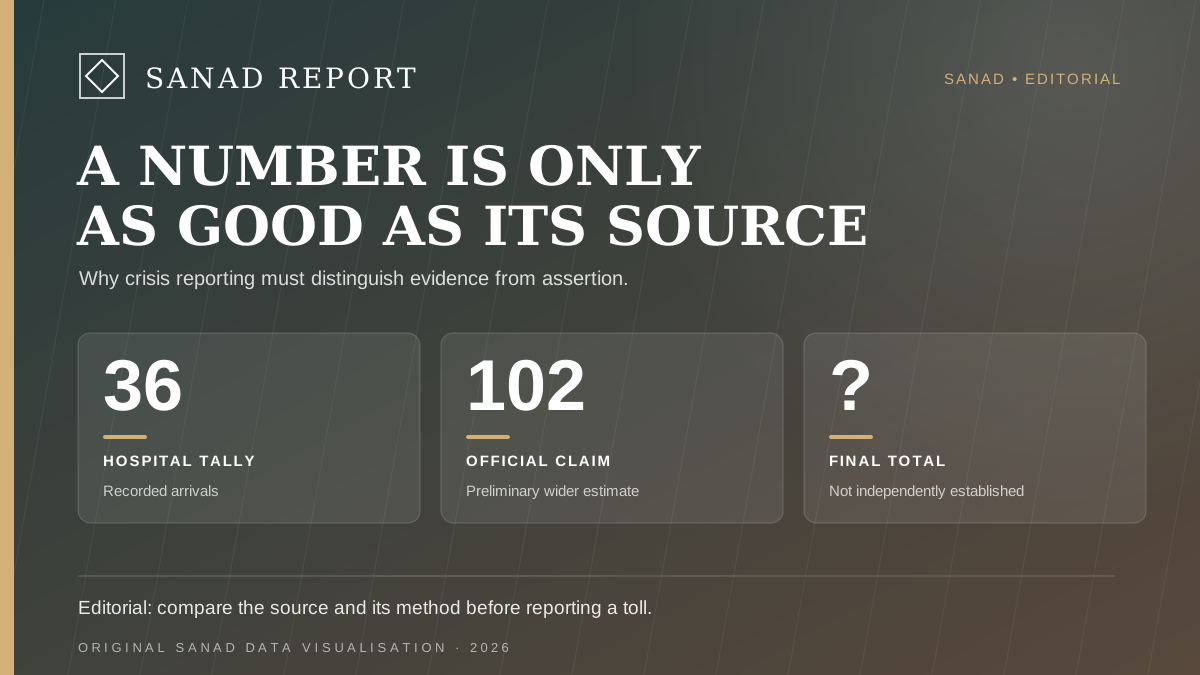
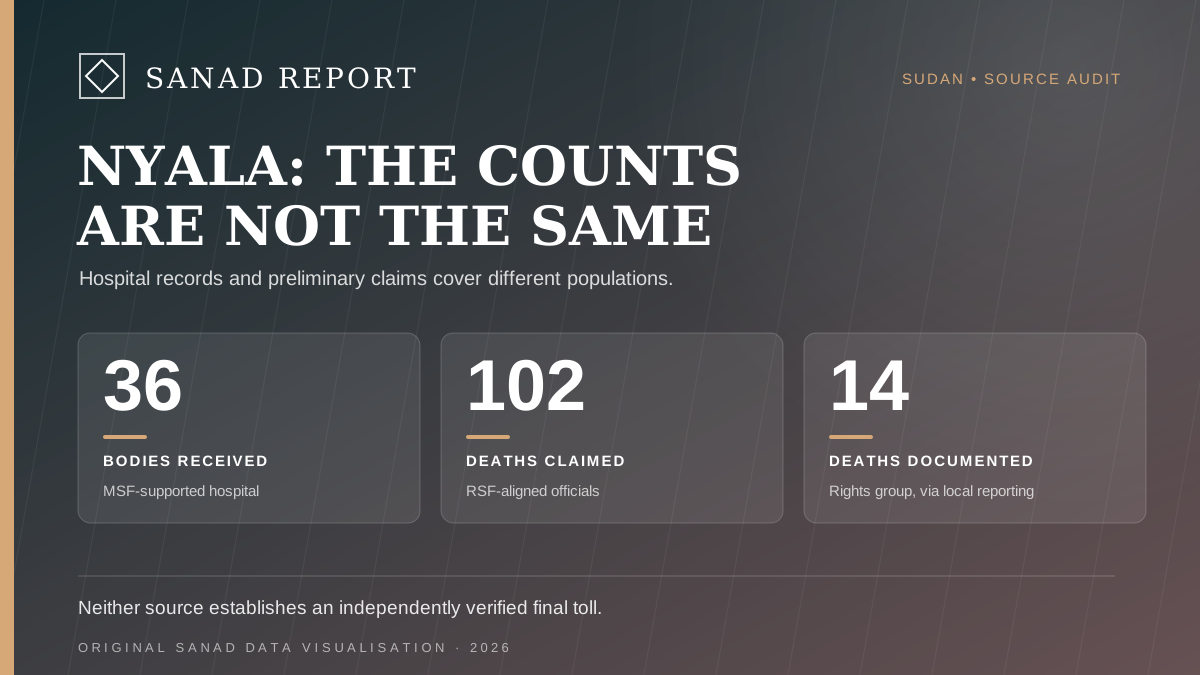
After the attack on Tangong market in Nyala on 26 October, we compared three published accounts. Médecins Sans Frontières said an affiliated hospital received 36 bodies. An RSF-aligned health minister told Radio Tamazuj that 102 people had been killed. Shahid Evidence’s 28 October statement repeated the 102 figure but traced it to the same political administration, while explicitly saying the final number was not independently verified.
The 36 was a hospital figure. The 102 was an administration’s preliminary assertion. Merely seeing the higher number repeated on multiple websites does not make it three independent counts.
The difference is not an argument about whether the suffering matters. It is a question about how readers are informed. Reporting an unqualified death toll can give an interested claim more certainty than the source justifies. Quoting only the hospital number can, in turn, imply that victims who never reached that hospital did not exist.
Our view is that a Muslim newspaper should resist both temptations. The ethical duty to honour the dead is not served by making certainty up.
What a responsible headline does
A headline can be strong and precise at once: “Nyala market attack: hospital receives 36 bodies; officials claim 102 killed.” The reader immediately sees that those figures measure different things. If stronger evidence later settles the count, the article should be updated visibly, not quietly rewritten as though there was never uncertainty.
The same principle applies to disputed election projections, aid statistics, mosque-fire allegations and political statements. Tell readers who counted or claimed what, how the source knows, and what independent checks have yet to happen.
This is how Sanad can develop its own perspective while remaining useful to people who disagree with its editorials. We may argue that civilians should be protected and that those responsible for unlawful attacks should face independent scrutiny. We cannot manufacture an evidential finding to make that argument sound more forceful.
Editorial method: This position is based on a desk comparison of publicly available MSF, Radio Tamazuj and Shahid Evidence accounts. Sanad has no independent hospital register, witness interview or verified final death toll. Our underlying comparison is presented in the accompanying Nyala source audit.
The sanad of this story
- MSF's Nyala Teaching Hospital account — Médecins Sans Frontières
- Local officials and Darfur Victims Organization interviewed — Radio Tamazuj
- Shahid Evidence identifies origin of the 102 toll — Shahid Evidence
Spotted an error? Request a correction. Read our editorial standards.
Related
Humanitarian · Africa
Nyala market attack: why hospital counts 36 bodies while officials claim 102 dead
Sanad compared MSF's hospital record, a local minister's preliminary toll and independent rights reporting. They measure different things, and no final verified total exists.
Explainers · Africa
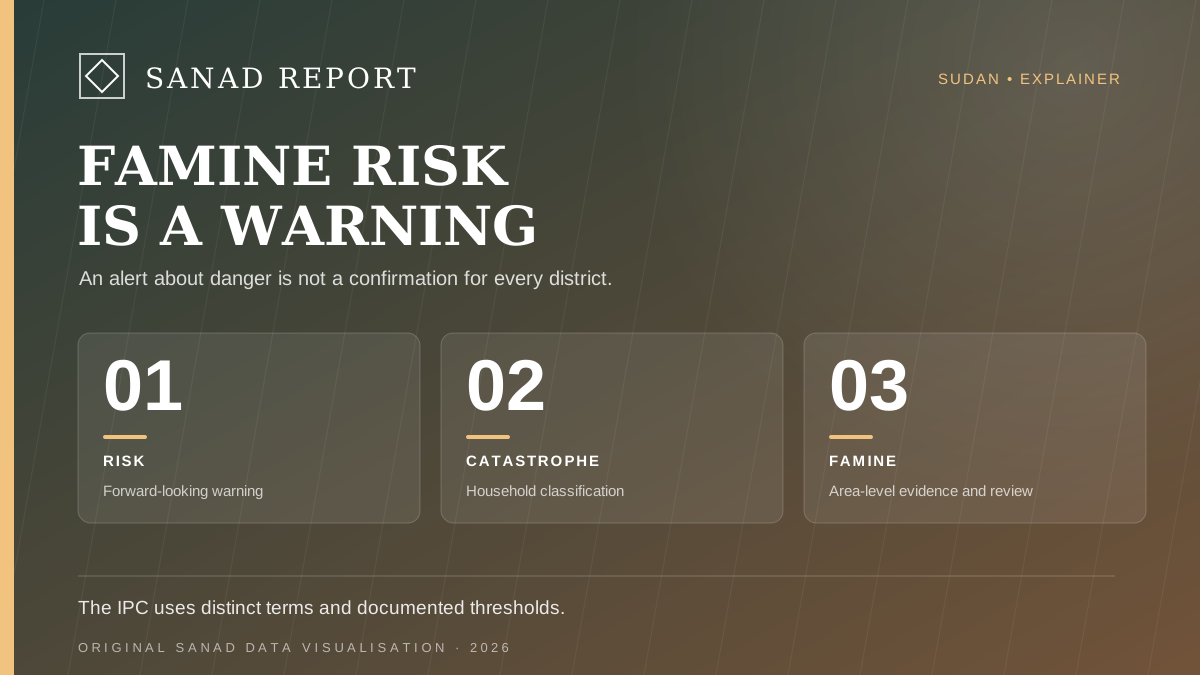
Sudan famine warning explained: the three tests behind the IPC alert
Sanad compared the IPC's classification rules with October's WHO and UN warnings to show what is confirmed, what is forecast and where the evidence stops.